
The Wheel of the Year
The year is a wheel, and we ride it. Eight times it turns far enough for us to stop, light a fire, and look at where we are. These are the Sabbats, and keeping them is the simplest and deepest practice we know.
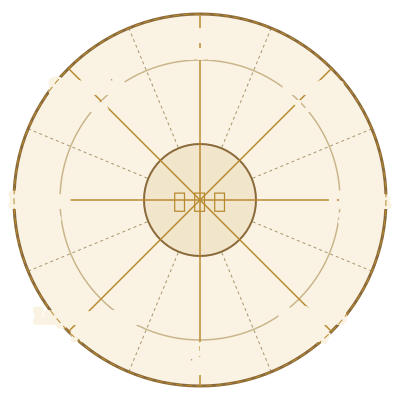
The eight Sabbats
Four are solar: the two solstices and the two equinoxes, the hinges of the astronomical year. Four are the old fire festivals that fall between them, marking the farming year of our ancestors: the first stirring of the ewes, the turning out of the cattle, the first harvest, the last. Together they make a story that is told once every year: the God is born at Yule, grows, weds the Goddess at Beltane, is cut down with the grain, and passes through the gates of Samhain to be born again.
Samhain
31 October
The witches' new year. The veil thins; the ancestors come to table; the old year dies.
Yule
About 21 December
The longest night and the rebirth of the sun. We stay up to see it rise.
Imbolc
1 February
Brighid's own feast. First light, first milk, the cleansing of the house and the hearth.
Ostara
About 20 March
The spring equinox. Day and night in balance, and the light winning.
Beltane
1 May
The fires of summer. Fertility, joy, the hawthorn in flower, the Goddess and God wed.
Litha
About 21 June
Midsummer. The sun at its height, and the first hint of its turning.
Lughnasadh
1 August
The first harvest and the first loaf. Lugh's games, and the grain god's sacrifice.
Mabon
About 22 September
The autumn equinox. The second harvest, the witches' thanksgiving, the turn toward dark.
A note on dates
The fire festivals have fixed dates, though many of us begin them at sunset the evening before, as the Celts counted days. The solar festivals move with the sky and fall within a day or two of the dates above; look up the exact solstice or equinox each year. Friends in the southern hemisphere turn the whole wheel by six months, so that Yule falls in June and Samhain at the end of April, and we think they are right to.
We also hold that the right date for a Sabbat is the one on which you can actually gather. The Goddess has never, in our experience, checked a calendar.
The Esbats
Between the Sabbats runs the moon. Many witches gather, or work alone, at each full moon, and some at the dark. These are the Esbats, and they are where most of the actual magic happens. The Sabbats are for celebrating; the Esbats are for working.
Keeping the wheel alone
You do not need a coven, a robe or a reason. Light a candle. Eat something in season. Say what the day means out loud, even to the cat. Write a line in your Book of Shadows. Do that eight times and you have kept the wheel, and you will find that next year you know things about the turning of the seasons that you did not know before.